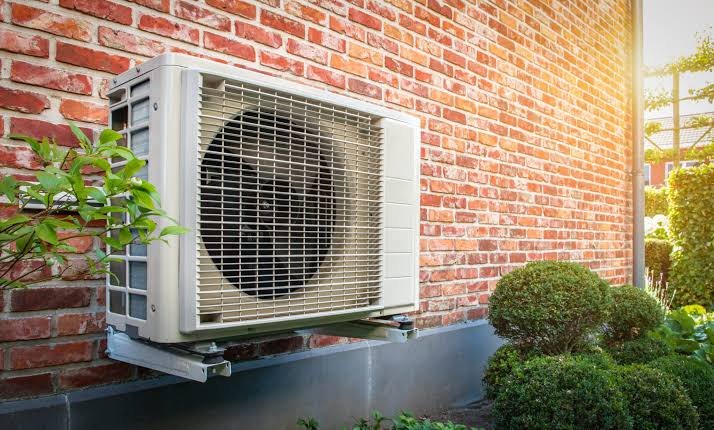
Ask ten Canadians about heat pumps and eight will say the same thing: “They stop working when it gets really cold.”
That belief is real, it is common, and it is about thirty years out of date. It came from equipment that genuinely did quit at around -8°C. The machines sold today are built differently, and the physics changed with them.
This article walks through what actually happens inside a heat pump at -20°C, what the capacity numbers on a spec sheet mean, when a backup heat source earns its keep, and how to tell whether a specific model is honestly rated for your town. No brand pitches. Just the numbers a homeowner needs before signing anything.
The Myth Started With Real Equipment That Really Did Fail
Air source heat pumps sold in Canada through the 1980s and 1990s used single-speed compressors. The compressor was either on at 100% or off. As outdoor air got colder, the machine pulled less heat from it, and there was no way to compensate. Output dropped off a cliff.
Most of those units had a hard cutout between -5°C and -10°C. Below that, a control board shut the compressor down and turned on electric resistance coils. Your bill tripled overnight. Homeowners noticed. Contractors noticed. The story stuck.
Two things fixed it: variable-speed compressors and vapour injection.
Variable speed means the compressor can push harder when it gets cold
A modern inverter-driven compressor changes speed continuously, roughly from 20% to 120% of its nominal rating. On a mild November day it loafs along at low speed, quietly matching the small heat demand of the house. At -18°C it ramps past its nameplate speed to claw back capacity that cold air took away.
That overspeed range is the whole trick. A single-speed unit rated at 36,000 BTU/h could only ever produce less than 36,000 BTU/h as temperatures fell. An inverter unit rated at 36,000 BTU/h can sometimes still deliver close to 36,000 BTU/h at -15°C because it is running faster than its rating point.
Vapour injection adds a second dose of refrigerant mid-compression
Enhanced vapour injection, sometimes labelled EVI or flash injection, adds a second refrigerant path into the middle of the compression cycle. It cools the compressor, allows higher pressure ratios without overheating, and increases the mass of refrigerant moving heat per cycle.
The practical result is a machine that keeps producing usable heat down to -25°C or -30°C instead of surrendering at -8°C. Nearly every unit marketed in Canada as “cold climate” uses some version of this.
Cold-Climate and Standard Heat Pumps Are Not the Same Product
This is the single most expensive confusion in the market. Both are called heat pumps. Both look like a box outside your house. They behave nothing alike in February.
| Feature | Standard air source heat pump | Cold-climate heat pump (ccASHP) |
| Compressor | Single-stage or two-stage | Inverter-driven, variable speed |
| Lowest rated operating temp | About -8°C to -15°C | About -25°C to -30°C |
| Capacity kept at -15°C | Roughly 40% to 55% of rating | Roughly 75% to 100% of rating |
| Behaviour in deep cold | Locks out, backup heat takes over | Keeps running, output tapers slowly |
| Typical rating data published | 8.3°C and -8.3°C only | Full curve down to -25°C or lower |
| Cost premium | Baseline | Roughly 20% to 40% higher |
| Sensible use in Canada | Mild coastal zones, shoulder season | Nearly everywhere else |
If a quote says “heat pump” without naming the model and showing a capacity table at -15°C and -25°C, you cannot tell which product you are buying. Ask for the model number and the extended performance data. Every reputable manufacturer publishes it.
What a Heat Pump Really Does at -20°C
Here is the part almost nobody explains properly. A cold-climate heat pump at -20°C does not fail. It gets weaker and less efficient, on a curve, in a way you can predict and design around.
Two separate numbers change as the temperature drops, and mixing them up causes most of the bad advice out there.
Capacity is how much heat the unit can make, measured in BTU per hour. This falls as it gets colder because there is simply less heat energy in colder air to move.
COP, the coefficient of performance, is how much heat you get per unit of electricity. A COP of 2.5 means 2.5 units of heat out for 1 unit of electricity in. This also falls as it gets colder, because the machine works harder for each unit of heat.
The performance curve, in plain numbers
These figures reflect what a well-regarded ducted cold-climate unit typically publishes. Exact values differ by model, so treat this as a shape, not a spec sheet.
| Outdoor temperature | Heating capacity kept | Typical COP | What that means |
| +8°C | 100% (often more) | 3.5 to 4.5 | Cheap heat, unit barely trying |
| 0°C | 95% to 100% | 3.0 to 3.5 | Still far cheaper than resistance heat |
| -8°C | 85% to 100% | 2.4 to 2.8 | Comfortable, efficient, no drama |
| -15°C | 75% to 95% | 2.0 to 2.3 | Running hard, still winning |
| -20°C | 65% to 85% | 1.7 to 2.0 | Roughly double resistance efficiency |
| -25°C | 55% to 75% | 1.4 to 1.7 | Approaching backup territory |
| -30°C | Model-dependent | 1.1 to 1.4 | Many units stop here |
Read the -20°C row again. A COP of 1.8 means the heat pump delivers 80% more heat than an electric baseboard would from the same kilowatt-hour. On the coldest realistic night of a Toronto or Halifax winter, the machine is still nearly twice as efficient as the thing it replaced in most electrically heated homes.
The balance point is the number that actually matters
Every house has a heat loss curve. It needs more heat as it gets colder outside, in a fairly straight line. Every heat pump has a capacity curve that falls as it gets colder.
Those two lines cross somewhere. That crossing point is your balance point. Above it, the heat pump alone holds your set temperature. Below it, you need help.
A properly done heat loss calculation gives you this number. A guess does not. If your balance point sits at -14°C in Ottawa, the heat pump carries roughly 95% of your annual heating hours on its own. If somebody sized the unit off square footage and it lands at -2°C, you will run backup heat all winter and hate your bill.
Why “it can’t keep up” usually means “it was sized wrong”
Almost every complaint about heat pumps struggling traces back to one of four installation problems, not to the technology.
- The heat loss was never calculated to CSA F280-12, the Canadian standard, so the unit is too small for the actual building.
- Ductwork designed for a 130°F gas furnace was left untouched, so it cannot move the higher air volume a 100°F heat pump supply needs.
- The refrigerant charge was set by gauge feel instead of weighed in, costing 10% to 20% of rated capacity.
- Controls were configured to bring in electric backup far earlier than needed, masking the heat pump entirely.
None of these are the compressor’s fault. All of them are avoidable before the equipment arrives on a truck.
Defrost Cycles Are Normal, Not a Malfunction
When you see steam rising off the outdoor unit and the fan stops for a few minutes, the machine is briefly running in reverse to melt frost off its coil, which is exactly what it is supposed to do several times on a damp winter day.
Dual-Fuel Ends the Argument for Anyone Still Nervous
A dual-fuel system, sometimes called a hybrid, pairs a cold-climate heat pump with an existing gas or propane furnace. One thermostat controls both. The heat pump handles most of the season. The furnace covers the deep cold.
For a Canadian household that already owns a working furnace, this is often the lowest-risk path to lower emissions and lower bills.
Setting the switchover point on cost, not fear
Most installers set the switchover temperature at whatever the manufacturer’s default is. That is lazy. The right switchover point is the outdoor temperature at which gas becomes cheaper per unit of delivered heat than the heat pump.
Here is how the arithmetic works out with sample rates. Substitute your own from your bills.
| Heat source | Assumed price | Efficiency | Cost per GJ of delivered heat |
| Heat pump at COP 2.5 | $0.13 / kWh | 250% | About $14 |
| Heat pump at COP 1.8 | $0.13 / kWh | 180% | About $20 |
| Heat pump at COP 1.4 | $0.13 / kWh | 140% | About $26 |
| Natural gas furnace | $12 / GJ delivered | 95% AFUE | About $13 |
| Propane furnace | $0.95 / L | 90% AFUE | About $42 |
| Heating oil boiler | $1.50 / L | 85% | About $46 |
| Electric baseboard | $0.13 / kWh | 100% | About $36 |
Read down that table and the strategy writes itself. Against natural gas in a low-rate province, the economic switchover point often sits around -8°C to -12°C, because gas is genuinely cheap. Against propane or oil, the heat pump wins at every temperature it can physically run, so you push the switchover as low as the equipment allows.
That second case is why oil-heated homes in Atlantic Canada see the fastest payback of any group in the country.
Cold Snaps Are Short, and Design Should Reflect That
People picture their entire winter at -25°C. Very few Canadian winters are like that.
These are rough annual averages of hours below -20°C, based on long-term climate normals. Your specific year will vary, sometimes a lot.
| City | Approx. hours per year below -20°C | Share of the heating season |
| Vancouver | Near zero | Effectively none |
| Toronto | 10 to 25 | Under 1% |
| Halifax | 15 to 35 | Under 1% |
| Montreal | 40 to 70 | About 1% |
| Ottawa | 60 to 100 | 1% to 2% |
| Calgary | 80 to 150 | 2% to 3% |
| Edmonton | 150 to 250 | 3% to 5% |
| Winnipeg | 250 to 400 | 5% to 8% |
Even in Winnipeg, more than 90% of heating hours sit above -20°C. Designing the entire system around the worst 5% of hours is how homeowners end up with oversized equipment that short-cycles for the other 95% of the winter.
The smarter approach: size the heat pump to carry the bulk of the season efficiently, then keep a backup for the handful of brutal nights.
Where Heat Pumps Genuinely Have Trouble
Honest advice includes the limits.
- Very leaky, uninsulated houses. If the building loses heat faster than any reasonably sized unit can supply, no equipment choice fixes that. Sealing and insulation come first.
- Undersized electrical service. A whole-home heat pump plus electric backup can push a 100-amp panel past its limit. This is solvable with load management, but it must be checked before purchase.
- Old high-temperature radiators. Standard air-to-water heat pumps struggle to feed cast iron rads designed for 80°C water. Larger emitters or a high-temperature unit are needed.
- Extreme rate structures. In provinces with very high electricity prices and very cheap gas, the operating savings shrink. Emissions still improve.
- Poor installer availability. A cold-climate heat pump installed badly performs worse than a decent furnace installed well. Regional skill matters.
Costs and What Drives Them
| Scenario | Typical installed cost range | Notes |
| Ductless single-zone ccASHP | $4,500 to $8,000 | Heats one main area, not a whole house |
| Ductless multi-zone (3 to 4 heads) | $12,000 to $22,000 | Zone control, no ductwork needed |
| Ducted centrally ducted ccASHP | $12,000 to $20,000 | Uses existing ducts if they are adequate |
| Ducted ccASHP plus duct modifications | $16,000 to $28,000 | Common in homes built for gas furnaces |
| Dual-fuel retrofit onto existing furnace | $10,000 to $18,000 | Lowest-risk option for gas homes |
| Air-to-water for hydronic heating | $22,000 to $40,000 | Specialized, fewer qualified installers |
Ranges are wide because the building drives the cost more than the box does. Duct condition, electrical capacity, and how much insulation work happens alongside will move a quote by thousands.
Federal and provincial incentive programs change often and vary by province. Check the current terms directly with the program administrator before you count on a number, and be very careful with any contractor who quotes a rebate as a certainty.
So, Do They Keep Up?
Yes, with conditions attached that have nothing to do with the myth.
A cold-climate heat pump, sized from a real heat loss calculation, installed in a house with reasonable air sealing, will hold temperature through a Canadian winter and cost less to run than oil, propane, or baseboards. Against cheap natural gas, the savings depend on your rates, and a dual-fuel setup lets you take the efficient months without betting on the coldest week.
The failure cases are boring and predictable: guessed sizing, untouched ductwork, ignored air leakage, and controls left on factory defaults. Those are process problems. Get the calculation right first, and the equipment does what the spec sheet says.
Before you accept any quote, ask for three things in writing: the CSA F280-12 heat loss result for your house, the manufacturer’s capacity table at -15°C and -25°C for the exact model proposed, and the calculated balance point. A contractor who can produce all three has done the work. One who cannot is guessing with your money.